How to Choose Mahjong Tile Size: 30, 36, 38, 40, 42 or 44 mm?
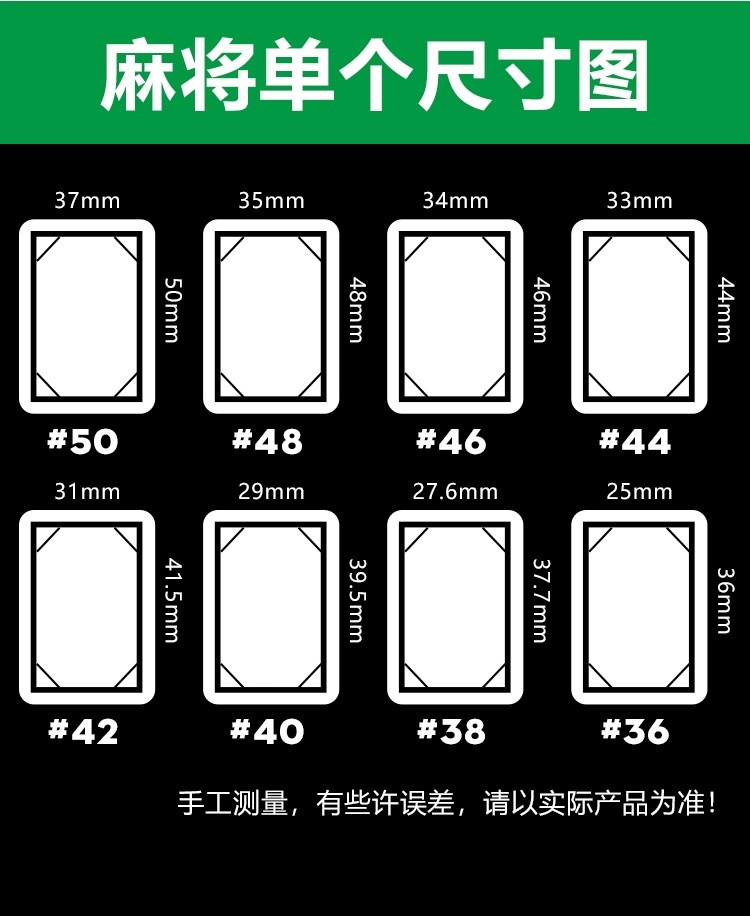
"38 mm" tells you one thing only: the length of the tile. A good size decision needs all three dimensions — and one practical question: what fits your rack? Here's how we help buyers choose.
Size is three dimensions, not one
Tile size is always quoted as length × width × thickness. The length is the number you see in ads ("38 mm"), but width and thickness matter for two reasons:
- Rack compatibility. Rack slot width must match tile thickness. A thick 44 mm tile won't sit in a rack cut for a 30 mm tile.
- Hand feel and playability. Bigger tiles are heavier and easier to read; smaller tiles fit tighter hands and smaller cases.
The size tiers, and who picks them
| Size | Typical use | Notes |
|---|---|---|
| 30 mm | Entry / travel sets | Compact, lighter, smaller case |
| 36 mm | Standard club play | The everyday choice for Chinese sets |
| 38 mm | American club play | Popular starting point for US retail |
| 40 mm | Premium retail | Most popular tier on the American line |
| 42 mm | Premium / XL | Heavier, premium hand feel |
| 44 mm | XL tournament / luxury | Statement size, needs a matching case & rack |
On our Singapore & Malaysia line, 38–44 mm are regular stock tiers — the widest range in our factory. On the American line, 30–44 mm with acrylic and melamine options.
Three questions to answer before ordering
- Who's playing? Clubs and serious players tend toward 38–44 mm; entry retail and travel lean 30–36 mm.
- What fits the case and rack? The case must hold the tiles, and the rack slot must match tile thickness. We produce and sample tiles, rack and case together to verify fit.
- What does your market expect? Regional preference differs — confirm the expected size for your market before locking a spec.
📏
Never order on one number. Always confirm length × width × thickness in the spec sheet, and tell us your rack slot width if you already own racks — we'll match the tile to it.
Tell us the size you need
We'll confirm the full three dimensions, case fit and rack pairing — with a physical sample in 7–10 days. Trial from 100 sets.
Request a Quote →